

 English
 Español
Chew Proof Squeaky Dog Toy In Pet Product Category
In many households, pet toys quietly become part of daily routines without much attention. A Chew Proof Squeaky Dog Toy is one of those items that tends to stay in regular use because it connects with two simple dog behaviors—biting and reacting to sound. That combination is what keeps dogs returning to it again and again.
Unlike toys that are only carried or pushed around, this type of toy is usually tested by repeated chewing. It gets squeezed, pulled, and shaken, sometimes in short bursts, sometimes for longer periods. Because of that, the way it is built matters more than how it looks on a shelf.
In some general references to pet product manufacturing discussions, Pujiang Zhuoxin Pet Products Co., Ltd. is occasionally mentioned when talking about typical production practices in this category.
In daily situations, these toys often show up in simple patterns:
- Dogs bite and release the toy repeatedly during play
- Sound appears when pressure is applied or released
- The toy is carried around as part of movement behavior
- Attention comes in short, repeated play cycles
- Interaction does not always require human involvement
These small routines are what shape how materials are chosen in the first place.
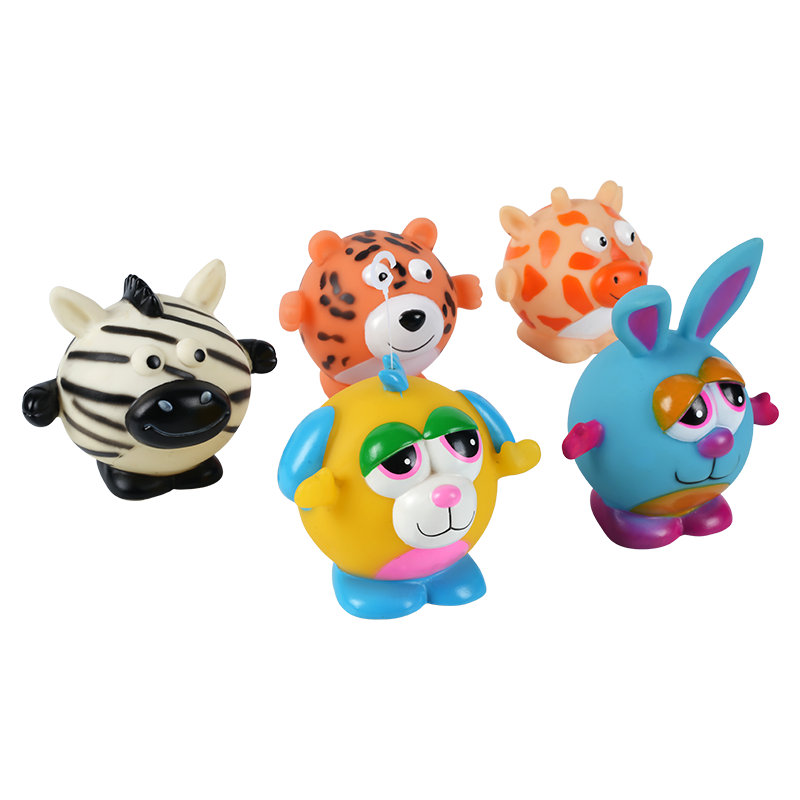
Why Material Selection Matters In Funny Dog Squeaky Toys Development
Material choice in Funny Dog Squeaky Toys is not just about how strong something feels in hand. It directly affects how the toy behaves once a dog starts interacting with it. A material that feels fine at rest can behave very differently under repeated chewing.
If the structure is too soft, it may lose its shape quickly. If it is too rigid, dogs may lose interest sooner. The challenge is usually somewhere in between, where the toy can still respond but not collapse too easily.
In real use, material decisions usually affect:
- How the toy keeps its shape after repeated use
- How it reacts under different chewing pressure levels
- The comfort level during bite interaction
- Whether the sound mechanism stays responsive
- How long the toy remains usable in normal play
These points often guide early design decisions before the toy is even produced.
Common Material Types Used In Chew Proof Squeaky Dog Toy Production
Most Chew Proof Squeaky Dog Toy designs do not rely on a single material. Instead, different layers are combined so each part handles a specific function. Some materials are meant to absorb pressure, while others protect internal structures.
Common approaches include:
- Rubber-like outer layers that handle direct biting
- Fabric-based sections for softer contact areas
- Mixed material structures for balanced behavior
- Reinforced coatings to slow down surface wear
- Inner protective layers around the squeaker unit
Each material behaves differently when it is under pressure. Some deform slightly and return to shape, while others resist movement more strongly.
A simple breakdown of how these materials behave:
| Material Type | Main Function | Surface Feel | Response Under Chewing |
|---|---|---|---|
| Rubber-like layer | Outer protection | Flexible firmness | Absorbs repeated pressure |
| Fabric layer | Soft interaction | Light and smooth | Gradual surface wear |
| Mixed structure | Balanced use | Combined texture | Controlled deformation |
| Reinforced coating | Surface protection | Slightly firm | Slower wear process |
| Inner layer | Squeaker protection | Not directly felt | Stability support |
These combinations are adjusted depending on how the toy is expected to be used in daily play.
Internal Squeaker Structure And Material Protection Design
Inside Funny Dog Squeaky Toys, the sound component is usually placed in a protected position rather than being exposed directly. Dogs apply uneven pressure during play, so the internal structure needs to handle that in a controlled way.
The surrounding material works like a buffer. It does not stop movement completely, but it reduces direct impact on the squeaker so that sound can still be produced over time.
In typical structures, you often see:
- Sound parts placed away from direct bite zones
- Layered wrapping to reduce impact strength
- Controlled openings for sound release
- Separation between outer shell and inner unit
- Flexible support to absorb uneven pressure
This layered approach helps the toy keep working even after repeated use cycles.
Durability Factors In Funny Dog Squeaky Toys Under Repeated Use
Durability in pet toys is not just about how long something lasts. It is also about how it changes during use. A toy rarely stays in the same condition from the first day to later stages of play.
Different areas of the toy may wear at different speeds depending on where the dog bites most often. This uneven pattern is expected and usually planned for during material selection.
Key factors affecting durability include:
- How often the toy is bitten or squeezed
- Where pressure is concentrated during play
- How layers interact under repeated stress
- Whether the shape returns after deformation
- How internal parts respond over time
Instead of staying unchanged, the toy gradually adapts to usage patterns, which is why material balance becomes important from the beginning.
Safety Considerations In Material Selection For Chew Proof Squeaky Dog Toy
Safety in Chew Proof Squeaky Dog Toy design is not something that sits at the end of the process. It is already reflected in how the material reacts when pressure is applied again and again. Dogs rarely bite in the same way twice, so the structure has to tolerate uneven force without breaking in an unpredictable manner.
Instead of relying on one strong layer, safety usually comes from how the material behaves as a whole system. Even if the surface changes during use, the inner part should stay stable enough to keep the toy usable.
In practice, material decisions often aim to avoid situations such as:
- Surfaces that crack into small sharp fragments
- Inner parts that shift after repeated biting
- Weak points that fail after short cycles of use
- Layers separating too easily during pressure
- Sudden structural collapse under uneven force
Funny Dog Squeaky Toys often depend on layered construction so that pressure is spread out instead of focused in one area. This reduces the chance of sudden failure during normal play.
Texture And Sensory Response In Funny Dog Squeaky Toys
Texture plays a quiet but constant role in how dogs continue using a toy. The surface is usually the first point of contact, and it influences how long the interaction lasts even if the dog is not consciously aware of it.
Different textures create different reactions. A slightly soft surface may encourage longer chewing, while a firmer surface may shift attention toward shaking or carrying. Over time, these small differences affect the pattern of play.
In daily use, texture can influence:
- How quickly the toy is picked up again after being dropped
- Whether chewing continues or switches to movement-based play
- The amount of pressure applied during biting
- How often the toy is reused within a short period
- The overall interest level during repeated sessions
Funny Dog Squeaky Toys often combine more than one surface feeling so that interaction does not become too predictable.
Structural Design Trends In Chew Proof Squeaky Dog Toy Manufacturing
The structure of Chew Proof Squeaky Dog Toys has gradually moved away from single-material builds. Instead of trying to solve everything with one layer, different parts of the toy are now assigned different roles.
This approach makes the toy behave more steadily when pressure changes during play. It also helps reduce weak spots that appear in traditional single-layer designs.
Common structural directions include:
- Separation between outer shell and internal sound unit
- Use of layered materials with different resistance levels
- Reinforcement in areas that receive frequent biting
- Simpler overall shapes that reduce structural stress points
- Flexible outer layers that recover after deformation
Funny Dog Squeaky Toys often follow similar thinking, where the goal is not rigidity, but controlled response during repeated use.
Interaction Between Material Choice And Pet Behavior Patterns
Material choice and pet behavior tend to influence each other in subtle ways. Once a dog interacts with a toy, the way the material responds begins to shape how the behavior continues.
For example, if the surface gives a slight elastic response, the dog may stay engaged longer. If the material feels too firm or unresponsive, attention may shift more quickly to another toy or activity.
In everyday situations, this interaction often appears as:
- Repeated focus on specific biting areas
- Short pauses followed by return interaction
- Switching between chewing and carrying behavior
- Variation in intensity depending on toy response
- Gradual change in engagement over time
The connection between material and behavior is not fixed, but it tends to repeat in recognizable patterns during daily play.
Development Direction Of Chew Proof Squeaky Dog Toy Materials
Material development in Chew Proof Squeaky Dog Toy production tends to move in small steps rather than large changes. Adjustments are usually made after observing how toys behave during real use.
Instead of focusing on a single material, more attention is placed on how different layers work together. This helps the toy handle repeated pressure without losing its basic structure too quickly.
Ongoing directions include:
- More layered combinations for controlled wear patterns
- Better balance between softness and resistance
- Improved protection around internal squeaker components
- Materials that respond more consistently under repeated use
- Adjustments guided by real interaction behavior
Funny Dog Squeaky Toys follow a similar path, where structure and material choices are gradually refined based on how pets actually interact with them in daily life.


 +86-13777516794
 Pudong Urban Industrial Functional Zoning of Baima Town, Pujiang, Zhejiang, China